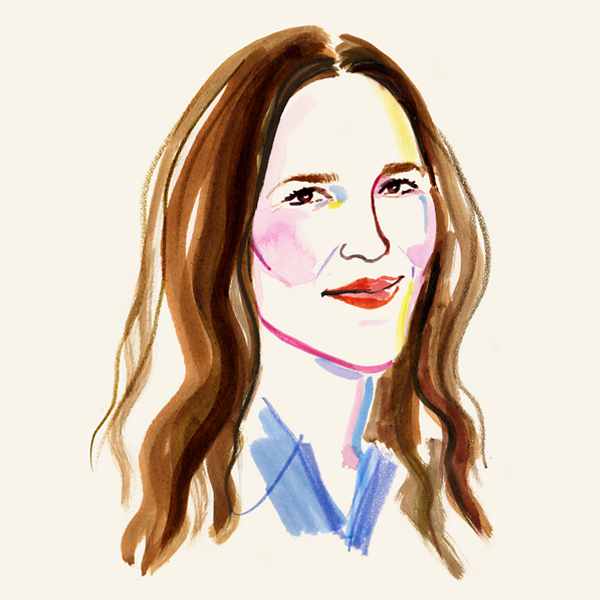






Peloton’s bikes and treadmills may stay in one place, but the brand has found powerful ways to move people. In this episode, Peloton CMO Megan Imbres joins Lippincott’s Rob Chedid to explore how she’s bringing fresh cultural relevance to Peloton, from unexpected partnerships with Miley Cyrus and Hudson Williams to expanding the brand’s ambitions beyond the Bike. She shares how she approaches brand building brick by brick, combining bold creative instincts with data and a clear sense of what each marketing investment needs to achieve. Drawing on lessons from Netflix, Amazon, and Apple, Megan also discusses balancing short-term performance with long-term growth, building teams that put the business ahead of individual agendas, and why human connection remains a powerful competitive advantage in the age of AI.
Rob Chedid: Hello, and welcome to Icons in the Making. I'm Rob Chedid, partner and head of marketing at Lippincott, joined today by Megan Imbres, chief marketing officer of Peloton. Megan and I first met earlier this year at the MMA CMO and CEO Summit, although met at a marketing conference makes it sound considerably less fun than it was. We actually got to spend some time together at a vineyard outside Santa Barbara, which it turns out is a much cooler way to get to know someone than trading notes between conference sessions. I also had the chance to hear Megan share some of her experiences as a marketing leader in an insights forum my colleagues Tim and Dylan hosted at that summit. And she reinforced one of my biggest takeaways from the week, which was that data informs, but stories persuade. And Megan has no shortage of stories. Over the course of her career, she's helped build some of the most influential brands of technology and entertainment, from Netflix and Amazon to Apple. Where her work included cultural moments, like the Apple Music Super Bowl halftime show. Today, she's bringing all of that experience to Peloton at a fascinating moment in the brand's evolution. So today, we're going to get into what it takes to inherit and evolve a brand that people genuinely love, how Peloton is thinking about community, content, and culture, when to follow the data, and when to trust your judgment, and why, as AI transforms marketing, the human side of brand building may matter more than ever. But before that, Megan, since our last hangout involved a fair amount of wine and cheese, I feel like we should start today with your slightly healthier extracurricular activity. You recently competed in an Ironman World Championship in Nice, and then on Linkedin I saw you wrote just so beautifully about going into that race, feeling terrified, but ultimately finding strength in the community around you. I'd love to hear a little bit about that experience.
Megan Imbres: Oh gosh, that's so nice. Yeah, it was certainly a really challenging race. I had as you do with these Ironman races, you have to know about the course and what's in front of you, and I kind of psyched myself out a little bit before the race. And so I woke up in the morning, and I went over to my sister's hotel. And, had a coffee and was eating my breakfast and I looked at her and I said, maybe we should just order room service and just stay in this room. And it just felt really overwhelming. And I cried a little bit, and I think I might have scared her, because she's not used to seeing me like that. And so she just kind of nudged me along. We walked down to the lobby and went out to transition, is what they call it. Transition's where you have your… all your stuff, and you're waiting to get out and to swim the course, which the swim is in the Mediterranean, there's currents, there's all these things. And so, I was standing there, and I started chatting with this woman from Brazil who was so sweet, and all of a sudden we're in these, they put you in these chutes to go out to the sea, and we're standing in these chutes side by side, and I… before I even knew it, I realized we were holding hands, just to kind of help support each other. I know! It's so sweet! And then, right before, it was our… because you have these 4 seconds before you go in, and so in those 4 seconds, we just gave each other the biggest hug. And it just really humanized the experience. And so I was able to… to do the swim, but I was still kind of looking at my watch. I got out of the water, I'm looking at my watch, and I'm getting on the bike, and I'm still referencing my watch, and we're climbing up this giant mountain. There's 4,100 feet of climbing in this race, which is significant for a half Ironman. They're generally not that mountainous.
Rob Chedid: It’s significant for anything, I think. That's pretty…
Megan Imbres: I think actually the Tour de France goes up this, this 16 mile climb. So I'm going up it and I'm just like thinking in my head like, this mountain sucks. And so I just said it, and you know me, you've hung out with me. I can't help but just like say something. And so I just yelled.
Rob Chedid: Yeah.
Megan Imbres: "This mountain sucks." And there were these women around me, and they looked at me like I was crazy, but then they started laughing. They're like, oh, the crazy American. And they started laughing, and then we started chatting. And then one of them shared that it was her last race. And she said, this is gonna be my last race, and I just really wanna enjoy it. And so prior to that moment, I had just been looking at my watch and thinking about my time and thinking about where I was and then all of that. It's so crazy when all of that can just go out the window. And so then I wasn't thinking about the clock at all, and I was just thinking about how privileged I was to be in that moment, to be in France, to be riding on the mountain, to be looking at the sea, which sounds quite cheesy, but it was real, and it was just so special to be surrounded by all these amazing women. And so it was probably 30% of the way through the bike ride, and then the rest of the race, I just stopped thinking about it, and I just really tried to take it in, and so I finished my bike ride, I'm in transition,and I'm looking around at all these women who are my age, because we're the last, we're the older ladies, so we… they don't focus on the race course till the very end, and so we're in there, we're transitioning, we're putting on our running shoes, and I'm looking around, and I say, I hate to break it to you, but I don't think any of us are winning today. And we all started laughing. So it was just fun, and so the rest of the race, it was just…How are we cheering for each other…I was trying to cheer for people, people were cheering for me, and it just took me out of that crap. And I was able to finish and I felt so good. It's such an interesting thing, because it's such a human thing to feel that way, and to feel, caught up in the noise of everything that's going on, whether that's in the middle of an Ironman World Championships, or whether that's just in your daily life. And when I think about what I'm trying to do with Peloton as a brand, it really is trying to position Peloton as that escape and as that moment to just be able to let yourself go, enjoy yourself, and really find your solace.
Rob Chedid: I was going to say it sounds just like the let yourself go campaign platform. But you're right, everyone's been in that experience.
Megan Imbres: Right, and I think we're all feeling so over-optimized as just human beings. I don't know about you, but if I was tracking my sleep every night, and sometimes I still will. I'll sleep with my Garmin, and people have their Oura Rings, which are awesome, but there is an anxiety level that comes with that, and even when it comes to my Strava data and everything, it's just… it can be a lot, and you're like, am I getting enough grams of protein? I used a protein calculator the other day, and I was like, what is this? You know, and so there's just so many things, where we're really in this era of optimization, and I think even digitally, with AI and everything, it can be just very overwhelming. And so I love… what we've been trying to do and are somewhat doing with Peloton, which is really trying to turn all that on its head, and to have Peloton be this more of just this happy escape for you. And all our instructors kind of live that. When you take their classes, they'll tell you, they'll say, you know, try to be here, but if it's not your day-to-day, that's okay. And so, it's important to have that reminder.
Rob Chedid: Well, I think that sort of lived experience of it, that firsthand experience, you know, I'm curious, all of the brands that I mentioned in your intro where you've been, I'm sure you're a user of all of them, but considering you're such a competitive athlete. How does that change the relationship you have with the Peloton brand, and what additional insight does it give you as a tried-and-true user of fitness product.
Megan Imbres: Yeah, I think it definitely makes me have a few more opinions when it comes to product development. And so our product people.
Rob Chedid: I'm sure they love that.
Megan Imbres: But no, I think it's interesting cause I don't think if you talked to me maybe three, four years ago, I wouldn't have considered myself an athlete, I wouldn't have called myself an athlete. And when I got into triathlon maybe 10 years ago, I had really young babies at home. I just happened to get into a race because Netflix was sponsoring the Malibu Triathlon, and they had a team that was a part of it. And so they were kind of like, oh, you should do this thing. You're kind of a runner. And so I signed up and I remember I went in there— and I had trained, but I had to get in and out because I had to get home to my kids. And so I'm driving home from this competition, and my phone starts ringing, and it's one of my friends at the race. And she said, Megan, you placed, you podium’d. And I had no idea, but I couldn't turn around and go back and get my medal. I had to take care of my children.nSo I went home. But, it's so interesting to have gone through that experience, and I eventually purchased a Peloton, because for me, there was no way for me to train and get better, without Peloton. And so I really rely on the convenience, I rely on the safety. LA's not, as it turns out, the most safe place to ride a bike, I'm sure you can probably imagine. And so for me, I really, really identify with our members because I think for a lot of them, they're in the same boat. They want their workouts to be more convenient, but also really effective. And so, that's why I'm such a fan of Peloton. I couldn't have been where I am, and I couldn't have gotten to ever qualify for the World Championships without my bike, and now I have a treadmill as well. And so I have my treadmill too.
Rob Chedid: Congrats on that launch, by the way. I want to get into that in a little bit too, but Before we do that, it's clear you have this affinity for fitness, and I think that's a big part of your personal life. But I'm curious beyond that and beyond what you just described with the connection to the brand, what else about the brand was it that drew you to this job?
Megan Imbres: Great question. So if you look at my history, Peloton is the first fitness brand that I've been a part of, and now that I'm working in fitness, I'm upset with myself that it took me so long to find it, because it is so core to who I am, and it's such a passion. And everyone at Peloton has this passion for improving people's lives, and there's nothing better. I get emails, I get pings from members almost every day about how Peloton has changed their life, and so that's incredibly rewarding. But I would say that the reason that I went to Peloton is probably for a far more masochistic side of my personality, which is I like to go into these kind of wartime environments. I'm definitely more of a Churchillian leader, to the detriment of my personal relationships. And so. I when I started working at Netflix it was a DVD company it was just. On the heels of Quickster that I came to start working there. And so there was a lot of work that they needed to do to rebuild their brand trust. And when I went to work at Apple, for example, I wasn't working on the shiny iPhone or the iPad or the watch, any of that. I was working on services, which is kind of the black sheep within the organization. Even though it grew to be, I think while I was there, at least a quarter of the revenue, which is massive. and so I really love, taking on these challenges with brands that feel like. at the time with Netflix, they just launched House of Cards Season 1, so you could kind of see, oh, this could be something interesting. And, with Apple, … I had always worked in digital subscription, I was really familiar with digital subscription, and so I just thought,, maybe this could be something really interesting, and especially with the backing of Apple, to work on. And with Peloton, to answer your question,, I just really didn't see what I felt as a Peloton member reflected in the work. And I think, it was really important to me to come into Peloton and start working on the brand and have it embody this feeling of being able to accomplish something that you maybe didn't think was possible, and this feeling of being able to, you know, after you have that workout, and you just have that liberated euphoria type of feeling,, I wanted people to be able to feel that, and also feel really proud of what they accomplished, so.
Rob Chedid: Well, I feel like the new Miley work definitely does a little bit of that. So I'm very excited to get that if you can't tell.
Megan Imbres: Yeah.
Rob Chedid: One of the things that you just touched on, that I'm going to dig a little bit into, you mentioned sort of the challenges that you walked into with some of those other brands. And Peloton has, forgive me saying, a bit of a checkered history with some of those.
Megan Imbres: Oh, 100% we're still working on it, right? Yeah, of course. Yeah.
Rob Chedid: But it was pandemic darling and there were those big cultural hits like with the response ad after the Sex and the City movie situation. And then there were the other moments where there were maybe more learning opportunities like the infamous holiday ad. I'm curious when you're inheriting a brand with that sort of checkered history and with the personal connection you just went into. When you're thinking about what are the things you know you need to change, or the things you feel passionate about changing, versus what is sort of inherently a core part of the brand's equity that you have to protect. How do you navigate that between personal point of view and personal judgment versus what the macro data is telling you about the consumer base or subscriber base?
Megan Imbres: Yeah, I mean, of course I would. I would love for my creative endeavors at Peloton to just be this creative journey that I get to go on right?
Rob Chedid: Wouldn't we all?
Megan Imbres: Wouldn't that be amazing as marketing just to be able to feel your way through it. And, unfortunately, that is not the case. And we have to be accountable for the data. Right. And so, we've been doing and we have done a ton of research around members, but really potential members. And so who are potential audience segments that we can go after? And we're not looking at it from a demographic perspective. We're looking at it from where is the demand, that untapped demand that we can feed into. And so I'm not going to go through. all the ways in which we do that, but I do think it's really important when you come into a new brand to really look at, okay, who is the audience that you've been targeting? And I got a lot of questions when I started. Is this the right audience? And I was really honest. I said, I don't know. We have to do a lot of work. so we've been working for the last 4 or 5 months around starting to figure out, okay, what is that untapped demand? Who are these people? Who are these segments of audiences that we can go after? But at the same time, I couldn't stop in reinvigorating cultural significance into the brand. And so it's kind of been this…, flying the plane while building it type of scenario, where we're working to get smarter, and we're working to figure out who these audiences are, but at the same time, we're having to use a little bit of our gut and all the research that we've already done to inform where we're heading to reinvigorate the brand.
Rob Chedid: … clearly, it's still sort of a work in progress, to your point. I think part of what's interesting to me about that challenge is that Peloton is still, to a lot of people, so synonymous with the bike. But even with last week's renewed launch of tread and thinking about how the brand is expanding past just hardware and into content and new media platforms, and I saw an upcoming event in Chicago for a race on the website recently. You know, that ecosystem keeps growing, and … the brand doesn't wait for you to catch up with figuring out where the direction is supposed to head.
Megan Imbres
Right
Rob Chedid: What is the role that brand with a capital B, brand strategy. What's the role that plays in holding it all together and making sure there's still cohesion as you do build the plane as you fly it, as you said?
Megan Imbres: Right., what I had to do with the team is we had to prioritize. And that's the number one thing. I mean, that's what I learned from Reed Hastings working at Netflix is he always poured into us. we have to focus on streaming. And even though the DVD business at that point in time was a larger business, it was making more money, that was the bread and butter to say, as an organization, we have to walk away from that, because we believe streaming's gonna be more beneficial. You can think of it almost very similarly for Peloton. Peloton, clearly, the bike is important, it will always be important, and we need to support that. However, we have so many more modalities. We have meditation, we have yoga, we have strength, right? We don't just have this bike, and we have running, and we have a treadmill, right? And a rower. And so… So, for us, it's been about picking a lane, and so with that, it's clearly running. We want to be as famous for running as we are for cycling, and so that's something that we're working on. And then when you mentioned the running event in Chicago, all that has to line up as well, right? So what are the different things that we're doing that help complement the story that we're trying to tell. so that's really, how the team has been focused. Sure, there are other things that are gonna come up, and there's great opportunities. For example, the U.S. Open, we sponsored that. That's a huge cultural moment, and it happened in our backyard, right? So there's some of these things that aren't completely, like matching luggage, when it comes to branding. But you have to be able to constantly prioritize what is actually going to lend itself to what we're trying to build, which is famous for running, and also cultural credibility, so people know that Peloton is showing up, and we're still a brand that is strong, and,, working to really make its name again in a slightly different way, right?
Rob Chedid: Well I want to dive into that cultural credibility element because I think Peloton is especially strong at that. And, this summer, we published a report with Bloomberg Media called CMO Outlook, where we surveyed over 500 CMOs from every corner of the globe. One of the things that came through in the research, almost universally, that was a bit of a paradox, was around culture based marketing or tapping into culture where there's this huge pressure on brands to be culturally relevant. There's a piece in Rolling Stone even recently about like brands are expected to be contributing to culture. But at the same time, CMOs, we asked them, what are your most successful growth strategies? And they pretty ubiquitously ranked campaigns that tap into culture as among their least successful growth strategies.
Megan Imbres: Oh, that's interesting.
Rob Chedid: Yeah, and I think Peloton's showing up in really interesting ways. I've talked about Miley five times already since we started this recording. I think earlier in the year, you guys snagged Hudson Williams super quickly when he became an A-lister overnight. how do you decide where Peloton has the right to play, who the right partners are, and how do you balance that, too, while your own people, your own instructors, are becoming celebrities in their own right?
Megan Imbres: Gosh, I have so much to say on this. So it's a great question. There's a lot of layers here. So I think the first thing to note is, I can understand why there's a lot of CMOs that say, tapping into celebrity doesn't really do anything for our brand, our bottom line. And how I look at brand building is you're laying bricks. It's brick by brick by brick. And so, when you think about what we did with Hudson Williams, it wasn't really a moment to sell the product. Sure, we would like to sell the product, but at the same time, we were really marketing Peloton as a feeling and as a brand. And we were very intentional about what that work set out to do. With Miley, it's clearly a new product launch, and so I think you have to know, as a brand and as a CMO. What are you actually trying to do? And I think what happens is sometimes you get in this situation where you launch these campaigns and it's kind of like, oh wait this is not actually driving the bottom line, but there's a huge benefit to being able to kind of lay the foundation for your brand. And that's really what Hudson Williams did for us. It was a huge moment. We… I think we had over 5 billion earned impressions. It was massive, massive.
Rob Chedid: I noticed the logo didn't even show up until the end card right It was just so clearly him in situ of using product, but it really wasn't the star of the piece, and the coverage was phenomenal.
Megan Imbres: … but you saw the treadmill, we made sure the logos were really prominent, and so we tried to be very subtle with how the brand showed up even with the instructor integration. Right. It was something that just kind of elegantly flowed in.
Rob Chedid: Right.
Megan Imbres: I've had a lot of…experience with cultural moments, whether it's launching Orange is the New Black, or Stranger Things, … and tapping into culture, and I found it incredibly successful, but I think at the end of the day, it really has to be aligned to your brand. And so, if you do these things where you get these arbitrary folks that have no connection of course it's not going to do anything. And so, for us, with Hudson, he had a history with Peloton, he loved Peloton.
With Miley, she has a whole history. You can see it online of her training on Peloton. And so being able to tell that story after we launch a piece and have that BTS where you have this talent talking about how Peloton is a part of their lives is so important. And so I think that's. in my opinion, what a lot of brands miss. I mean, look at the Sydney Sweeney campaign that just happened not so long ago.
Rob Chedid: Which one?
Megan Imbres: You know, and whether you loved it or whether you hated it or whatever I did, I mean, what I look at from a brand perspective is I look at, is my brand being mentioned? Is my brand being talked about, right? And it was not. I couldn't even mention the brand right now. but I can talk about a lot of things that I personally didn't really like about it, right? when you're working with celebrity, when you're working with culture, It can't just be, let's just do this for the fun of it. We went back and forth and debated very, very heavily around what type of talent that we would be looking at and running analyses on potential earned media. So there's a lot of work that has to happen behind the scenes versus just getting the cool person. Right.
Rob Chedid: Well, I love that this sort of builds from the point before about the balance of judgment and data, being able to run some of those analyses in advance. I'm sure it gives some confidence in the decision to pursue some of those celebrities. Is there any other impact more broadly within culture marketing that you're pursuing? Or is celebrity really the at least for now way in for Peloton?
Megan Imbres: I think, it's one way in. every concept that we look at, it has to work independent of celebrity. It's like, how do we storytell with what we're trying to do? And so once we had Miley, we did change the concept slightly, given we found out she had new music. That was a pretty interesting…
Rob Chedid: Which is a banger, by the way.
Megan Imbres: Was a banger. I have to be honest, I was really surprised that she wanted to work with Peloton. And I think she doesn't do a lot of commercial work. She's pretty choosy about it. She has Maybelline and that's about it. And so I think Having her engage with us spoke volumes. And when I'm thinking about celebrity, I do really try to find someone who is someone who's going to be really interesting for the brand, where people are going to look at it and say, oh,. That's so crazy that Miley did a Peloton ad. And I think it could you could say the same thing for Hudson Williams. And that's that's really what we were trying to play with when we play with celebrity. How do we get someone who's so unexpected that it makes people pay more attention?
Rob Chedid: Well, and it sort of, elevates the cache of the brand, right? Like, they are both…
Megan Imbres: Absolutely.
Rob Chedid: So in the conversation right now.
Megan Imbres: yeah.
Rob Chedid: Really great gets.
Megan Imbres: Yeah, no, it's aligned incredibly well as far as,, her album launch, and like I said, when we found out about the new music, I'm such a music person, so I remember waiting. to get the track to listen to it, because to me, … it was really, really important, and we had created this beautiful 80s like world when we were concepting. And so even if you look at not only the Miley piece, but our product films, they weave in this kind of 80s typography and even the pans that we do across the product are very of that era. And so we spoke to her creative director about the fact that this was going to be somewhat in the 80s realm, her album, and so obviously, the team and I, we just kind of lit up when we heard that.. I remember getting on a plane and getting a link, and with the link, you could only listen to the track so many times because it was this obviously preview track and this special link, so you couldn't just pass it around. And so I got the track and I'm trying to listen to it on the plane and I'm waiting to, and I just had 30 minutes to where, and so then finally I landed and then I was able to fire it up and it was, I feel like I was like dancing through the airport.
Rob Chedid: That’s amazing.
Megan Imbres: Yeah.
Rob Chedid: Well, we just touched on Miley's sort of being a user of the product,, being part of the broader peloton community. And I think that's a word that really holds a lot of power when it comes to Peloton. We run this global study every year called Go-to Brands. Thousands and thousands of consumers, we look at hundreds of brands globally. And what we look at is whether these brands do one of 2 things. They either drive an emotional connection with the customers who use it. Or they help drive progress in their customers' lives. And the brands that do both of those things earn the distinction of go-to, which is only a small subset of the total that we survey. So when we think about go-to brands, among them, there are some that really stand out. Peloton in our 2025 list won the superlative of Tribe Builder because it was.
Megan Imbres: Thank you for that.
Rob Chedid: Oh we did nothing. All we did was measure it. It really truly comes down to the work you guys have done. I mean, it's the brand that customers ranked highest of all of the surveyed brands for making them feel part of something bigger than themselves. And that's why, it struck a chord to me when you mentioned Miley. It seems like there's probably a little bit in there that's more than just interested in the check for participating in commercial work, but really believing in the product and the community., I'm curious what you think Peloton’s done differently compared to other subscription products and other fitness products, and whomever you consider your competitive set, or even outside of your competitive set, considering how broad that data set is, … what was done differently, and what does that mean for member engagement, and how have you built and curated that community?
Megan Imbres: So our instructors are the core of that community, and they're arguably the best instructors in the world. They provide the motivation, they provide the drive, they are great on social, they're great social connectors. And so I really have to, give them the credit for what they've been able to do and what they've been able to nurture through that Peloton lifecycle. I think Peloton wouldn't still be standing without them. they're so critical. And they're also really diverse and just have interesting perspectives. And so I think they're super, super valuable to building that tribe, and also nurturing that tribe. My job, as I see it, is how can I help nurture that? How can I include them more in the storytelling? And so that's something that you've seen with the Hudson Williams piece with Tune Day, and then we included Adrian Williams with one of the Miley pieces. And so we've been really intentional about highlighting them in ways so they feel like they're more of a part of the brand than maybe they have been in the past. And we have had ads that have featured them before, but, I feel like we are trying to do that as a marketing organization more consistently. And so, even with our instructor, we're having more instructor shoots, within our product films, we feature them as well. so we've been, working really hard to integrate them in to our marketing comms, as well as, like, how can we do just even more storytelling around them. So whether that's their backstories or, making sure that we're telling member stories, but also having the members speak about our instructors as well. And so, there's a lot to play with there, and I feel like At the moment, it's a slightly untapped resource, and we could do more to integrate our instructors into more of the storytelling to build that tribe even more strongly,
Rob Chedid: I love that, and it's just such an interesting tension for where we are right now, just generally as an industry and a society, where you're saying dial up the human connection to the faces that people care about.
Megan Imbres: Right.
Rob Chedid: I think every conversation this side of 2022 has had some mention of AI, and so I'm curious when you think about creating this sense of one-to-one human connection through the faces of the brand, but at the same time, I'm sure you, just like every CMO, is under pressure to adopt AI to move faster and be more efficient and produce more. How do you think about balancing that human connection with the application of something so inhuman.
Megan Imbres: I love this question because I feel like this is what's really going to continue to differentiate Peloton, is the fact that we have this human connection with our instructors, and that they are so embedded within these tribes of Peloton users, So to me, It's a huge…competitive advantage. However… you can't ignore AI and the power of AI. And so, where I feel like marketing went wrong is that everyone jumped on AI and tried to create kind of the lowest common denominator of AI, which was, let's just recreate ads. And so then, obviously. the ads were not good, they did not connect, they didn't feel human, and so the industry started revolting, and so every time someone did some type of AI ad, I don't know if you remember, but … it would be like the internet exploded with criticism, right? Around that, rightly so, I feel like, because you're just kind of…
Rob Chedid: The people in those ads just looked so alien, so non-human. It was spooky.
Megan Imbres: Yeah. And you, and you feel it, right? even now there's some docs or emails or even text responses that I'll get from people and I look at it and I'm like, this is AI, and it feels wrong, right? When you see that. It doesn't feel good.
Rob Chedid: One more, not this, but that structure in an email will send me spiraling. I can't.
Megan Imbres: And then all the slop that you get in these docs, because we're a big doc culture, and so I'll get docs, and I'll look at paragraphs, and I'll call out my team. I’m like, come on, just remove this. Remove these three paragraphs. This could be one. And we don't need all this.. Don't waste my time reading your AI slop. And so. So I.
Rob Chedid: Just drop it back in AI to summarize. You don't have to dignify it with human eyes reading it.
Megan Imbres: But I do think there's huge value in doing things that we never thought possible. And so when I think about things like, there's so many marketing communications that we do as a team, so whether that's email or push notification, and so how do we make these more personal and so taking the human component to create the messaging and to create the imagery and the craft, right, to focus on that. But then, using AI to be able to kind of stitch these things together in a way that could be more meaningful, and also more effective as a marketing communication, I am here for it. And so, we're starting with some of these processes that have been really tedious, I would say, on creative teams, tedious on our Member comms teams, and so we're looking for how do we take these things that were just really laborious for teams, and make them much easier to execute, save money, and potentially could be more effective. Because what I hear a lot in the industry is people aren't necessarily saving money. When I talk to my fellow CMOs, they're like, "No, we haven't seen a dollar saved.
Rob Chedid: If anything, tech costs are on the rise because of it.
Megan Imbres: Yeah, so for Peloton and our marketing department, we're just trying to be really intentional about where are the easy, quick wins where we know we can save dollars and also make our people happier. And so that's really how we're looking at weaving AI into our workstreams right now.
Rob Chedid: That's great. When I think of the tedium you mentioned, a lot of that can be really, sort of, time-intensive one of the other themes from that CMO outlook report I mentioned, and that you actually spoke to a little bit. You reacted to some of the learnings live back in Santa Barbara in July.
Megan Imbres: I’m so good live.
Rob Chedid: Those were great, honest reactions, but the biggest tension that was the furthest thing from a surprise was, CMOs not necessarily struggling to balance, but feeling the pressure of balancing both delivering in the short term and moving with speed, with the need to make sure that they're creating long-term sustainable growth through brand building. And I think what's interesting, we didn't really get into your title, but your responsibilities at Peloton are broader than the typical CMO. You wear a lot of hats in your role. And so across all of them, and through the lens of commercializing the brand. … how do you navigate that? How do you keep everyone focused on where the brand needs to be in 5, 7, 10 years, but also making sure you're meeting the demands of being a publicly traded company, and needing to post results, and needing to prove the marketing is working, and that the data is showing something.
Megan Imbres: Yes.
Rob Chedid: What's your advice for CMOs who might not have all the same responsibility and purview that you have the privilege of having.
Megan Imbres: Yeah, no, it is a really fun role, and that I do get to touch a lot and oversee a lot, which, has been awesome, honestly. … I feel really fortunate to be in a place that really does elevate the CMO role. It is a huge challenge between short-term and long-term. You are always trying to balance those things because there's new opportunities constantly You're reprioritizing all the time. And so, while I like to say we're planning one year, two year, Right now,. I've been here for just over a year. So now we're we're about a year and a half, I would say, two years out. And, so a part of it for me has been how do I have really strong lieutenants around me? it's so critical, because my remit is so big, and so this past year has been around evaluating my team, looking at things that I need to pull more closely to me, and so I've ensured that consumer insights, for example, that was something that was kind of layered within the organization. I've had that now report directly to me, which has made a world of difference in providing insights and making sure that all the research that we're doing is laddering up to that future vision, right? that's been very helpful, and it's also helped the organization prioritize research and consumer insights, because that's something that I think some organizations, they don't necessarily do, and when we're looking at how are members going to react to something new? Our members are our bread and butter, right? And so we need to make sure that while we have all these new ideas and new initiatives that we want to do, we want to be really thoughtful about the fact that we have a member base that's super committed to us, and how are these things going to land with them? And so Consumer Insights is very, very important to Peloton. Something else that I did is we have this new product that just launched, the Tread Flex. And so we had to do a lot of work around pricing. What is the right pricing model to be able to make this thing work for customers. We'd heard for a long time that they wanted a cheaper treadmill. And so, what is that level that we can give them that's going to be a super high-performance product, but also somewhat affordable. Treadmills by nature are not the most affordable products. and so what I did this past year is I created a pricing and promotions team. And so now I have that reporting directly to me. It's led by our friend Susie, our mutual friend. And so.
Rob Chedid: Amazing. Shout out, Susie. Nice to have a mutual.
Megan Imbres: Yes. And so I feel like in order, it's you can balance short term and long term, but you have to be surrounded by a really, really strong. Team that knows their stuff, and knows how to execute, and knows how to move. I couldn't do it without them. And so they are incredible. And so I'm surrounded by some really, really good people. And I know that sounds like a basic thing, but I do think if Netflix taught me anything, it was to always be evaluating your talent. And thinking about the fact that you need the best of the best. If you want to be the best in the world, you need to be surrounded by the best. And so that's been quite the journey. And then what else I would say is that any short-term decision that I need to make, because you're going to have to make short-term decisions, I'm always thinking about how does that lead to the long-term decision? What precedent am I setting if I say yes to this? And so that's something I'm really trying to weave into my team when they're thinking about I mean, they're making decisions on a daily basis, and I really work hard to empower them. But how are we thinking about what this means? Once this rock is at the top of the hill, but when it's at the bottom of the hill, it's going to mean something else. And so we have to be really thoughtful around that.
Rob Chedid: Yeah, I think that makes a ton of sense. And there's so much in what you just said that, you know, when I think about that study. When I compare what the 500 anonymous CMOs told us versus what you're saying, I think you have such an advantage in the sense that, for a lot of them, having data and insights report up to them isn't the case. To have pricing report into them isn't the case. And you mentioned, that you're grateful to work at a place where the CMO role is given the runway to do what it needs to do. I'm curious how you think being armed with that degree of data and that degree of insight and control over, you know, how the consumer approaches the various price points and being able to set those based on what you heard feedback-wise from voice of the customer work.
Megan Imbres: Right.
Rob Chedid: How does that change the calculus of your role within the C-suite? Do you feel like you have outsized influence compared to what other heads of marketing and other CMOs might have to work with? And… Is there anything that you wish you had maybe more of to solidify or progress that influence, or do you feel like you have the adequate level now?
Megan Imbres: Look, I think I really try to operate as what is gonna be best for the organization as a whole. And I know that sounds super diplomatic, and it is, I agree, it's a diplomatic thing to say, right? …
Rob Chedid: But the right thing.
Megan Imbres: But no, I learned a lot working at Netflix because of the fact that they were growing so quickly and had to change so much, and so you were constantly, evaluating, okay, does this team need to change responsibility? Do we need to hire a completely new team? And you would have these conversations with the team in the room. And so you had to get really comfortable really fast with the fact that you might go away, your role might go away, but maybe you wouldn't go away because you can provide
Rob Chedid: Mmm.
Megan Imbres: The valuable insights the company needed or needs at that time, but that's not always going to be the case. So for me, when I'm working at Peloton, I'm really trying to see, okay, like. there's these different groups that report to me, should we combine this group with product? Would that make sense? Should I move, shift this team over to content? Like, you do have to be doing a ton of, kind of, calculus in your head around these various teams, and where they're going to be more successful, and where these people are going to be the most successful. and what happens sometimes in these high-level roles is … you have all these different little fiefdoms reporting to you, if you will., and some people get really protective of those fiefdoms, and they just want another one, and another one. And the reality is, is that sometimes the company evolves, and it changes, and it doesn't make sense anymore for you to continue to have that piece of the pie,. And so I think we should, constantly be evaluating as leaders. Does it make sense to still control these fiefdoms? Is there one that should actually be at my level? Like, that is something I'm always looking at, because, look, I am here to make people grow, I'm here to further their careers, and if I can do that and help Peloton grow, I'm gonna do that. And, so you do have to take, kind of, the preciousness out of the equation, and, and look at really what's gonna drive the company growth.
Rob Chedid: Yeah, incredibly well said. You know, we think about the name of this podcast, Icons in the Making. On the former side, with icons, I want to ask a little bit about your personal icons, but before we get into that. In the making really alludes to the idea of us all being works in progress and careers are long and we learn a lot on our way to where we are now, but there's still plenty of runway to go. I'm curious as you've grown throughout your career. You've touched on some of the lessons already. But maybe what's 1 belief about marketing that you genuinely held earlier in your career that you've since changed your mind about.
Megan Imbres: Oh, gosh. I was early in my career, I worked on the agency side, and we'd get this feedback from clients all the time. And I'd be curious to hear if you've heard this before, where they say, oh, well, another brand could say that.And I used to think it was so deep and it was one of those things where I was like, Oh, another brand could say that.
Rob Chedid: Yeah.
Megan Imbres: And I was really precious about it. But then and then I would be like, oh, okay. Well, then I don't wanna do it. And what I've learned, especially working at a company like Apple where they are so good at saying the thing. Right? They're so good at saying the one thing and.
Rob Chedid: Yeah.
Megan Imbres: The way that you say something can be the competitive advantage. If you can say it more beautifully, if you can say it more interestingly. And so, sure, yes, another brand could say that. Another brand could say, let yourself go, right? But if you can do it in the right way, it can mean a whole lot more. To someone. So I do think that's something where I've changed my religion around it for sure. And I have a lot of confidence in my creative team and what they're capable of. And so since most of my creative team is that we work with agencies too, but all the creative that we've done for the campaigns has been through our internal team who's amazing.
Rob Chedid: Incredible.
Megan Imbres: So it's interesting because I do think if you have the right team and you have the right partners, you can say something similarly, but it might mean a little bit more coming from the right talent, right?
Rob Chedid: Or even just the first to say it. Sometimes you just have to be the one to plant the flag and say, this is what we're about.
Megan Imbres: You have to beat them all.
Rob Chedid: Could be about the strategy, could be about the execution, but I think that's a really interesting one. And to the first part about the icons, who is a personal icon of yours and why?
Megan Imbres: Oh gosh, I have two. And so I mentioned him earlier. One is Reed Hastings from Netflix.
Rob Chedid: Of course.
Megan Imbres: He was phenomenal, and when I started at Netflix early in my career, he was terrifying, and I would have one-on-ones with him… and he actually is very kind and very nice, but he's so smart. He's so smart, and although he didn't totally understand brand marketing, especially when I started, he had this sense of marketing that was just really spot on. I mean, he understood what we were trying to do with culture, and he got it, and he let us do these crazy campaigns, and so I just, give him so much credit for being someone who's so incredibly analytical. He was able to give marketing the leash that we needed to do really amazing creative things. And he pushed, but it made the work better. I said this earlier, but Reed's singular focus for streaming, is unlike anything that I've ever seen anywhere else. I remember coming to him, and talking about, oh, well, we could do partnerships, or we debated sub brands. Should we do Netflix kids? Should we do something different? And, he really was focused on how do we just make Netflix as impressive and amazing and wonderful as possible for as many people as possible. Like, let's not water that down. And since then, Netflix has gone on and done other things, but it was his discipline that really drove the success of that organization. And I feel very fortunate to have seen it up close, and it's absolutely had its effect on me. And the second person I would say is my current boss, Peter. I followed him from Apple. He was my partner in services on Apple, and he's one of the most empathetic leaders I've ever worked for, if not the most empathetic. And he's just a model of just what human leadership and caring leadership looks like.
Rob Chedid: It's incredible.
Megan Imbres: I feel very lucky to have worked with Reid and to work currently for Peter.
Rob Chedid: I could only hope that anyone who works or has worked for me would ever say that about me, but maybe not when I'm cranky or hangry.
Megan Imbres: I have my moments.
Rob Chedid: I haven't seen them yet, so it's okay. And Susie hasn't said anything. Well, thank you so much for joining us, Megan. This was an incredible conversation. Congrats again on the launch and looking forward to seeing you next time.
Megan Imbres: Yeah, it's good to see you!


“You have to be able to constantly prioritize what is actually going to lend itself to what we're trying to build, so people know that Peloton is showing up.”