


Unlocking growth through experience-driven marketing
With

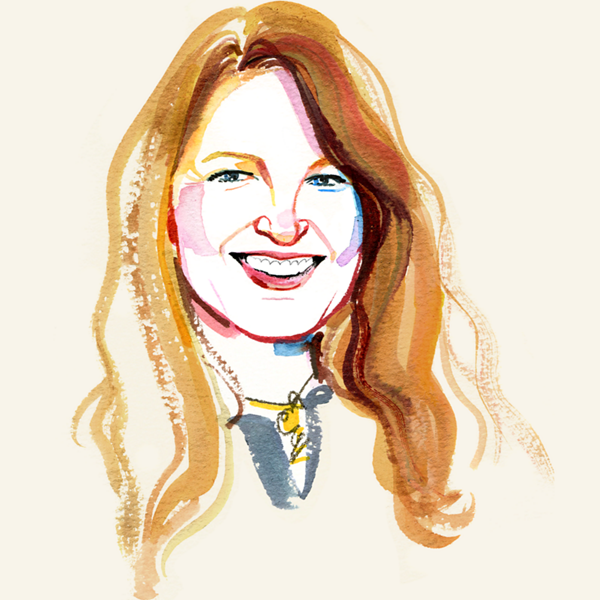




It’s rare you meet a leader who’s equal parts Chief Marketing Officer and Chief Experience Officer. But Jill Cress has mastered the art of bridging the promise of brand with the reality of the customer’s experience, most recently as Chief Marketing & Experience Officer at H&R Block. In this episode, she sits down with Tom Ajello, Lippincott’s Global Director of Experience, Innovation & Engineering, to unpack why uniting marketing with customer experience leadership is a strategic advantage and shares candid insights on the biggest marketing challenges today—from navigating AI’s impact to elevating marketing’s role in the C-suite. Drawing on her decades of leadership at MasterCard, PayPal, and National Geographic, she reveals why trust is the ultimate foundation for business success and why mentoring the next generation is critical in the age of AI.
Tom Ajello: Hey everyone, and welcome back to Icons in the Making. I'm Tom Ajello, senior partner and global director of experience, innovation and engineering at Lippincott and your host for today's episode. The intersection of marketing and customer experience leadership is a rare space and today's guest has made it her specialty. Jill Cress is a trailblazing marketer and strategist with three decades of leadership experience at Fortune 500 companies. Most recently she served as chief marketing and experience officer at H&R Block where she led a team dedicated to transforming customer experience and driving strategic marketing and communications. Her impressive career spans some of the biggest names in the industry. She's been vice president of brand marketing at PayPal, chief marketing and communications officer at National Geographic and spent over 20 years at MasterCard and she's been recognized on some of the top industry CMO lists from Adweek to Business Insider to Forbes, and I've been lucky enough to meet Jill before. We spoke on a panel together just recently covering topics like marketing, experience, the integration of AI, all the good buzzwords. I'm really excited to be sitting down with Jill again and having a fun, insightful conversation for everyone listening, let's get into it.
Jill Cress: I'm so delighted to spend this time with you and what a lovely, lovely intro you had me smiling.
Tom: As a fellow leader, I know what it takes to make traction and speaking of making traction and what it takes, sometimes it takes creative outlets and I understand through this getting to know you better that you're a mulled wine aficionado. Specifically you're behind Hetta, which I happen to know about because I gave bottles of Hetta away for Christmas last year and turns out you're a glogger. Tell me about that. Tell me how you got involved in that. Yeah, I'd love to know more. Just even personally.
Jill: I'm so happy to know that you are among the many energetic and enthusiastic fans of Hetta Glogg and it's the love that people have for this product, which is one of the many things that has me really excited about this venture. So this was quite a serendipitous journey. My husband and I moved to upstate New York to the idyllic Hudson Valley almost two years ago, and we were renovating this amazing old farmhouse and in that process we started to meet some really interesting people in the community, including the owner of the design build firm that we worked with, and he and his brother founded Hetta some 10 years ago and were looking to take it to the new phase of growth and we were so intrigued by the promise of Hetta and the opportunity to make glogg a category here in the U.S.
And so our journey to this is grounded in things that have guided me and our family, which is curiosity and exploring traditions. We lived in Europe, we've loved bringing different cultures from our travels around the world back to friends and family, and when we learned about Hetta Glogg and what this family had built, we were really excited to learn more. And part of that was getting out as a marketer who's interested in ethnography, getting out and listening to real customers, and like you, when I'm with people who have tried it, they get this really positive energy around what it stands for, which is really coming together around spending time with friends and family and this just lovely warm experience of drinking mulled wine.
Tom: Yeah, yeah. I mean, you'd have been proud of me because without knowing that you were behind it, I had the bottle set there on the butcher block and a whole pot steaming on the stove and everybody over for the holidays, and I was serving it like I was a shill for your company.
Jill: I think you get at; it is tradition ... It's glogg, for people who don't know, it is a mulled wine. It's a centuries old tradition in Scandinavian countries that when you gather with friends and family most often you have a family recipe. Ours is mulled with cardamom, cinnamon, raisins and orange peel. It's shelf stable, so we take all the work out of it-
Tom: The stuff of dreams.
Jill: It's cool and you heat it up and your whole house smells like holidays and just all that warm goodness. And our hope is that as spritz has become the drink of summer, our Hetta will be all about celebrating all things winter and time with friends and family.
Tom: You mentioned getting out there and boots on the ground. Obviously being in a startup like that, you learn a lot of lessons, different kind of lessons than you do in corporate suite. Anything specific that you apply to managing marketing on a broader scale that you learn in the Hills of Rhinebeck?
Jill: There are so many parallels. I mean, I think the first is appreciating the tradition and the legacy, really honoring that heritage as we think about the opportunity to introduce the category with intention. And so thinking about blending that Scandinavian origin with all of the energy that's out in the world right now specific to the Hudson Valley in New York. I bring a sense of curiosity, really getting a sense of what is this product and what does it mean and why are the fans of Hetta so attracted to it? And then of course being in our early phases of growth, this sense of accountability, it feels a little sharper at a small scale. Every decision matters and it's kind of reinforcing how I think about all of those things. The customer being curious, honoring the legacy and the sense of accountability that I have to growing this business.
Tom: It's incredible design by the way. The bottle just looks beautiful, which kudos to you and the team for everything you've done there. I guess switching gears a little, unfortunately we're not here to talk about Hetta all day as much as I would love to, but throughout your career you've had many leadership roles and a lot of them in financial services companies are sort of in and around the category, obviously most recently H&R Block previously as we mentioned, MasterCard, PayPal. What is it about finance? What is it about financial services? What's drawn you to it that your goal is to sort of thrive and continue to stay there? Just let us in on a little bit on some of those secrets.
Jill: I started my career out in banking and that quickly led to this amazing 22 year run that I had at MasterCard. So again, I kind of entered this category of financial services, loving the brand, loving what MasterCard was doing, and I quickly learned that what I love about financial services is that it's a trust-based category and you really have to earn that trust with consumers by understanding their relationship with money, with their finances. And I think it really starts to present an opportunity to know consumers at the various life stages and the things that matter to them. And so I just really have always been grounded in humans' relationship with money and how they think about both the discretionary and non-discretionary role, the utility of that, how do they really define their life through how they think about their finances and their relationship with money.
And so after 22 years at MasterCard, I did a little pivot as you mentioned to National Geographic and that was fascinating because I had the opportunity to, as someone who had bought media and thought about the opportunity to reach consumers through the intention economy, to really be on the other side of it and to work for such an amazing brand, but I was really drawn back to financial services and after a really rewarding experience at National Geographic, went to PayPal and then ultimately to H&R Block. And I think that opportunity of really earning that trust with consumers ... National Geographic is also a very trusted brand, so I think I'm just grounded in brands that matter and connect with consumers.
Tom: Well you know from previous conversations, trust and the development of trust is a big topic for me, probably no surprise to our audience to maybe be told that you oversee and have overseen marketing and experience to together. Talking about trust and that sort of thing is a big topic in that space, particularly when you're exploring the tensions between both sides of that. Overseeing marketing experience together is super unique as so many companies keep those functions separate. We've talked about this a bit, but maybe you could just unpack a little bit of the advantages of overseeing both and what's unique to your approach in doing so.
Jill: Yeah, it was one of the things that really excited me about the opportunity to take on this role as part of the executive leadership team at H&R Block was the fact that it was a role that really looked both that all things marketing as well as the end-to-end customer experience. And I think why that matters is it really starts to close the gap between the promise that we make to our consumers and the reality of that experience, the brand is really the world that the customers navigate and operate in.
And having the responsibility, the accountability to really bring the customer to life across the enterprise at H&R block through the lens of deep insights, the empathy that we bring for a category that is very stressful and thinking not only about the promises that we make to that customer, but really building them out through the lens of that end-to-end customer experience was what made that role really exciting. It made it hard because you're really trying to rally the enterprise around what is the promise of the brand, and we'd often say we can't market our way out of a bad experience, and so we have to think about that end-to-end experience and really teaching the organization to think about everyone's role within the micro experience.
We used to think about the macro experience, which at H&R Block was all about taxes. Although one of the things that I'm really proud of was that we moved beyond thinking that customers were buying taxes from us and realizing that they were buying an experience that was grounded in empathy, expertise, making it easy for them and making that really embedded in the experience and really defining what happens before, during, and after that tax experience and rallying the enterprise around the micro-experiences and how they come together in a more cohesive way for the customer.
Tom: Yeah, brand is such a huge part of making sure all the micro-experiences add up to something greater. We often say that the brand lives in the liminal space between what you say and what you do, and of course use the brand strategy as a key pillar for helping turn the CX into something that's more branded and that you become more notorious for, which ties all the way back to the trust thing, I suppose.
I find it interesting the idea of a branded experience across let's say the micro-moments as you did. It's interesting, that's not necessarily new news, but in the age of AI and LLM disability, suddenly that's gone from a useful topic we all knew to becoming mission-critical. Yeah, I guess I'm curious as AI reshapes discovery for you, what do you think becomes more important when you're trying to create a trusted brand? How does that enter into your thought process and in your work?
Jill: Yeah, it's really something that is going to significantly change how we think about the experience for sure. We're living in this world of zero-click discovery, and so we used to be able to think very specifically about our dotcoms as a destination to really welcome a customer into that experience. And one of the things I was really proud of at H&R Block was the fact that we created very specific journeys so that a Gen Z, someone who was a recent college grad, would get a very different experience when they landed within the world of H&RBlock.com versus someone who, for example, was embracing the gig economy and driving for Uber. So if we could understand who you were before you got to us, we could really curate that journey and ensure that we were meeting you with the most helpful experience specific to the forms that you needed, etc.
We started to see it last year. It was like, "Gosh, what's happening with traffic? Traffic patterns are different," and of course it was the advent and the utility and advantages of the LLMs that are making it much easier and so challenges us as marketers to think about how we're refreshing our content, understanding how we build experiences not just for the world of SEM but for the world of how these large language models are gathering information. And I think it's exciting, especially for a brands like H&RBlock, which has this huge retail footprint and allows us to really think about how we show up in local communities kind of doubling down on telling those stories. So I've since left H&R Block, but we were knee-deep in the throes of understanding the totality of the role of content in presenting that brand story to the consumer at the right moment. And we've got a lot to learn as marketers and experienced leaders in that space
Tom: Personally as an SEO evangelist and now I guess an AEO and GEO evangelist, there's some buzzwords we all have to learn. I actually really like this new era because measurability proving to stakeholders the importance of things like brand and marketing, it's actually there's less of a gap to bridge than before knowing all of this, which is I think really exciting.
Jill: One of the things that I was reminded of as I started to understand the work that had to be done was that I'm a lifelong learner, I'm a perpetual student, and I found myself really very deep in trying to understand all of this. And so personally I found it really interesting to lean into the learning aspect of it. But as someone who loves brand and really appreciates the role, the experience that the customer feels, it is a really exciting moment I think.
And we're going to see the rise of brand marketing again, and this has been long before the advent of LLMs this conversation as marketers, which is we just keep getting sucked further and further down the funnel into this world of attribution and what was the impact on brand overall. And now we start to see that it becomes more urgent specifically, the importance of brand having resonance, brand having content that supports the ethos of the brand, what we want that world that the customer lives in to be and the discoverability of that. So it is really I think an exciting time for marketers even if we're learning while we're implementing all of this.
Tom: We often talk about targeting the LLMs as your fourth persona, the most idiosyncratic and most influential customer you've ever targeted in a way. It's interesting. I mean, it's like you sort of have to be living under a rock to not have the AI topic just become something that floods all of your conversations. And this isn't really an AI discussion we're having. I thought it'd be fun to maybe weave into the conversation a bit of your opportunity to sound off on AI For you, is it exciting for you? Are there elements of the AI topic that are a bit of an eye roll for you or you're sort of tired of being asked about where's your appetite for it as you kind of go forward? I'm just curious how it affects your day to day in that way.
Jill: Yeah, well no doubt it is by far one of the most pervasive and persistent topics right now, and that's the reality that we're living in. And I think that a couple things just to respond to that, human judgment, particularly in the world of financial services and brands that are so trusted will continue to matter. I think the buzz and the energy and the hype around AI is becoming much more tangible around a topic that I'm really passionate about, which is the role of humans in transformation. And I think we all were, we're moving really quickly to understand where was the low hanging fruit, how could we drive towards more efficiency? But now there's just the reality of it's not just learning what's possible, but it's really embracing how we get people to adopt it for better outcomes, whether that is unlocking capacity, whether that's moving faster as we do things like create personas and get zero to one ideas in front of potentially some of those personas that we can create. But there's just so much that's possible out there.
And so one of the things that we really focused on at H&R Block over the last year was associate adoption, and we saw that any transformation, you generally have a coalition of the willing. We really tried to understand who was leaning into AI, what could we learn from them. One of the things that we've talked about before is that resistance to change for some is part of transformation, and I really like to rally around this idea of when met with resistance, embrace the opportunity to teach. And so we really had to slow down to speed up a little bit to understand what were the barriers to things to me that just seemed like, this is easy and this is exciting, and there's a lot that we can benefit from breaking down some of those barriers to really teach, to get people to understand what was possible.
Tom: Well, for sure it's affecting all of us, and as you noted, it's not just ... The generative aspects of AI are just the tip of the iceberg of all of the ways with which we can leverage it. You mentioned AI interviewees, which is a huge part of obviously what we could be doing as marketing and experience leaders, but also thinking in a broader context in terms of the way with which we could be leveraging AI across systems and tools and workflows. We can't put our head in the sand, that's for sure.
Jill: Yeah, and I think you mentioned something which is AI for workflows as we've just started to implement that, that is really exciting and just the foundational elements of how it's going to change the way that we work, the positive reality that we can get more done more efficiently. I think one of the things that is interesting when I think about at this stage in my career, my role is really all about leadership, and I think technology and something like AI really raises the bar for leadership to understand what are those foundational elements? How is this affecting associate or employee confidence, their barriers to change? And so I think that's been the interesting thing as well, which is just how do we assume the mantle of leadership to help drive the transformation and the we’re living in.
Tom: And agency leaders, I think CMOs and different executive leadership, one of the things, a torch that we're carrying is protecting that bottom rung, right? Those first jobs that we all benefited from that we learned the ropes in, obviously those are the jobs that AI can gobble up I think pretty quickly. And one of the most important things we can do is reframe that bottom rung of the ladder so that we don't lose the next generation of strategic advisors and associates as you said.
Jill: One of the things that personally I'm quite passionate about is my role in mentoring the next generation. I have a daughter who's 26. I've had the rewarding experience of watching her friends grow up and now enter the workforce. And so I do a lot of coaching and mentoring, and I do think this generation, particularly more recent college grads are learning the necessity of staying resilient as they navigate this change into how they think about entering the workforce and ensuring that we're finding new ways to help them learn. It's definitely some choppy waters for them to stay buoyant in.
Tom: For sure. I like you treat those topics very seriously, both because of my teenage kids, but also just I was lucky to have an enriching early career and I think it's a make or break moment for sure.
Jill: I agree, and I think the impact of AI as well as coming out of all of the challenges that generation had to navigate with COVID, and I think about my own journey. We talked about my time at MasterCard, 22 years there, it was such a rewarding experience. I was able to grow within a firm because I had that sense of sponsorship and mentorship from so many, and a lot of that came from the personal human in real life interactions of the opportunity to have small talk outside of a meeting room before you enter the meeting. And it's just that hot start, which we experience now in these virtual forums. So I think I have a lot of empathy towards this generation and to your point, a lot of gratitude for the experience that I was able to live through, which really benefited me in my career.
Tom: Keeping this topic, we all learn from mistakes. Obviously those early days are where we make a lot of our mistakes. Any interesting ones that you made along the way that was a good tuition, a good investment on your part?
Jill: I love that, the concept of the tuition that we pay for the opportunity to learn and become better leaders. That's a great question. Yeah, I think one of the things that I learned over and over again was that it's better to be effective than to be right. And there was one big moment when I was at MasterCard, which is a global firm. It's highly complex as a technology financial services company that offers solutions to consumers all over the world, and so you've got local leaders, you've got people in global headquarters. I was in a role where I was managing one of our global accounts, which were the most important accounts at MasterCard. And so that meant that you had stakeholders and different geographies across different products and something had gone wrong. And a leader that I was working for was insistent, and I knew in my gut this was wrong, but he was insistent that we really had to set the record straight and go through all of the things that we did right before something exploded.
I can't even remember what the context was, but we labored over sending out this big note. And again, as I was writing it, I was like, "This is going to be explosive." And it was. As soon as we sent it out, everyone went on the defense. That allowed me to just sort of take that pause and say, "Okay, how do we not double down on who was right in this situation, but how we can be more effective as a firm that cares deeply about the relationship with our clients? And that served me really well.
And going back to mentoring, I see it in how young professionals grow up, but I was right, I did the right thing, and sometimes it really just doesn't matter. And so I guess what I would say is it's better to be effective than to be right, and that does come with some growing pains, but that was definitely something that I learned a few times and you just kind of throw out, it doesn't matter. Was I right? Was I wrong? What do we learn from this? How do we take a moment? How do we unpack it and figure out how we can become better as a result of the experience that we just had?
Tom: I love that. And you heard it gang, it's better to be effective than it is to be right? I think that's good. Let's get that tee shirt, I like that a lot.
Jill: Thank you.
Tom: As a leader, obviously we take lessons like that and we carry them forward in our career, what's something as a leader that you do that you defend with your life?
Jill Cress: Well, I think very connected to that concept of being effective is the thing that I mentioned earlier, which is the opportunity to teach. And I think in my role in both leading teams and being a part of executive leadership teams when it comes to marketing, I think we often as marketers who believe in the role of brand who believe in the opportunity that we have to understand the consumer, we tend to want to defend marketing, we want to defend why it works. And I think the thing that I would die on the sword for is the opportunity to teach versus defend.
So again, that same concept when met with resistance, I think we have an opportunity to think about how we can be effective and often that is through teaching, and that definitely comes to life and how I've thought about my relationship with key stakeholders like the chief financial officer, the head of IT, critical stakeholders for anyone who's in a marketing executive role, a CX executive role. And it's really to speak the language of our partners to stop defending marketing, to really think about the opportunity to connect the dots between marketing and growth and how marketing is actually driving the business. And so I think sometimes that's frustrating because the CFO gets to speak in financial terms that have been consistent for the last 20, 50, 100 years. The role of the marketing, we're talking about AI, the language that we speak continues to evolve. The opportunity is on us to connect those dots to be explicit about the language that our partners understand and to teach.
Tom: I love that. One of my next questions was going to be about how do you prove the value of branding and marketing to skeptical executive audiences? I think teaching and training and that idea of executive learning and the role the CMO has to play because of how evolving our roles are is such an important one.
Jill: Yeah, one of the things that I really learned to appreciate in my last role at H&R Block was elevating how we thought about brand. I mentioned earlier that I think brand is this world that customers live in. And so within the world of marketing, we look at things like brand health and core to a brand like HR Block is the thing that we've talked about, trust. And so as marketers, we're really looking at how are the customers that we want to win with that are so critical to our growth, how are they feeling about the brand?
But when you start talking about brand health in the C suite, it tends to I think, just turn into marketing, blah, blah, blah. But when you think about the connectivity between brand health and corporate reputation and financial results, the willingness to learn and the willingness to understand the opportunity that we have to have a better reputation with our stakeholders, whether it's our associates, whether it is our customers, is very different. And so we started thinking very intentionally about getting rid of some of those buzzwords and thinking about, okay, if our brand is healthy or if our brand is lacking in certain areas, what does that mean for the reputation of the brand and how that can be a headwind on the financial performance.
Tom: This far in into my career, I'm still amazed that the select few, the select group of people who understand the correlation between a strong brand and growth or even design and how design equals value, is such an important lesson to learn as marketers and as experienced leaders, everything, we grace as a customer. You're not just a chief marketer, you're also a chief customer, I'm sure, of a lot of brands that you love. We as consumers, grace so many products and services and brands with our attention and our time, and there are things that they do that build that trust with us that makes it such an obvious thing for in terms of giving our time to another business design and a strong brand are such critical parts of that for sure.
Jill: Absolutely. And I think it goes back to one of the things we talked about earlier, which is what job is the brand and the experience really doing for the customer? And I think that work that we did at H&R Block to stop talking about, of course, the thing that we do is taxes, but the thing that the customer is buying is that expertise. It needs to be easy, and particularly when you're having a human relationship, it needs to come with empathy. And so really connecting the dots on how all of those experiences impact how someone feels about the brand and how that correlates to financial performance.
Tom: Well, Jill, I can go on and on with you, this was great. I really appreciate your time today. I'm lucky I get to conduct these sessions and meet icons, that's why we call it Icons in the Making. One thing I'd love to ask you is who's your icon or what icons in the making do you track that we should know about?
Jill: I'm going to give you a two-part answer. The first is someone who I suspect is fairly well known to the world of marketers. I continue to be inspired by Simon Sinek. I think one of the things that he has taught me through the years, starting with why not with what is just is human approach to leadership and the fact that we have to be clear about the jobs we're doing for customers, why it matters to them. And as I continue to grow and mature in my leadership, there's another core teaching that I take from something that Simon has talked a lot about, which is being a leader is not about being in charge, it's about taking care of those in your charge.
And I think that really ties to this idea of it's better to be effective than right, and for so long, I think as someone who was growing within corporate America, you do have that sense of, "Well, I'm going to be in charge one day." And then you get there and you realize, well, it's really about the people that are in your charge and I think really creating an environment where they have the confidence that they need to take risks to navigate change, to feel like they can be humble and vulnerable and learn. And so I still continue to consider Simon a true icon.
And then the other is my dad. My dad passed suddenly four years ago, but long before that, my friends and I would often say, "Ooh, Tom Justick would have something to say about that." And Tom Justick was an executive himself. He came from quite humble beginnings on the south side of Chicago, and he liked things done right. And so you didn't quit until things were done really well with a sense of excellence. You took accountability for your success, but more importantly for your failures, and you expressed gratitude for the opportunities that were presented to you. And so over the course of any day I think often about those lessons that I learned from my dad and he is a bright icon that I still think too and will think, "Gosh, what would Tom Justick have to say about this? What would Tom Justick do?"
Tom: It's so awesome to get to spend more time with you, and I really appreciate it. Yeah, thank you for spending your early 2026 with us and so excited to keep following you and learn what's next on your horizon and get to cross paths again, thanks for your time today.
Jill: Appreciated the opportunity to chat through all of this with you. Thanks so much.


“We can’t market our way out of a bad experience, and so we have to think about that end-to-end experience and really teach the organization to think about everyone’s role.”


