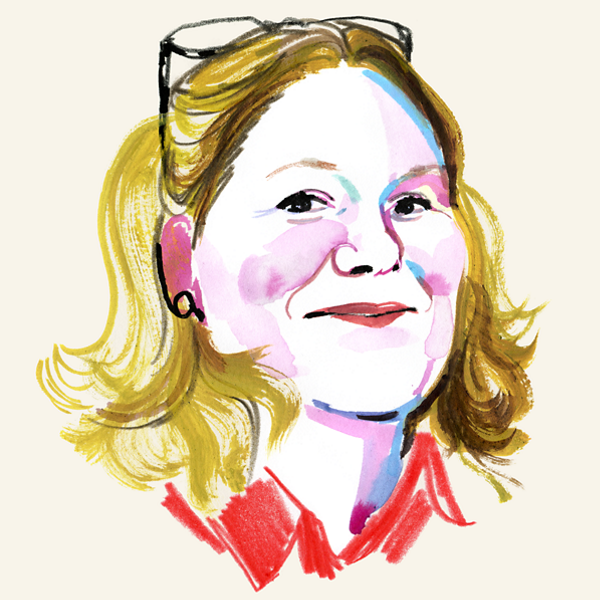






Few leaders get the opportunity to reshape a brand as iconic as Nokia—but Stacey Brierley has spent over two decades doing just that. As VP of Brand, she’s helped guide Nokia’s transformation from a handset giant to the invisible force behind global connectivity. In this episode, she joins Lippincott's Louise Cantrill to share why true transformation isn’t about sudden pivots, but long-term, intentional evolution. From redefining a legacy brand for new B2B audiences to aligning teams across cultures, Stacey pulls back the curtain on what it takes to drive change across a global business. She also reflects on the role of curiosity, strategic thinking, and carving out time to step back, showing how asking better questions and rising above the day-to-day noise can turn complexity into clarity.
Louise Cantrill: Hello and welcome to Icons in the Making. I'm Louise, Senior Partner at Lippincott and the host of today's episode. Today I'm joined by someone I've been very lucky to work alongside for many years, and even luckier to call a friend. Stacey Brierley, VP of Brand at Nokia is one of the boldest, most fearless clients I've ever worked for. She's highly strategic, brilliantly sharp, and has a remarkable ability to beautifully steer this iconic brand through some massive changes.
I've had a front row seat to much of her 20-year journey at Nokia, including working together on the brand transformation a few years back. Today, we're going to pull back the curtain a bit. We'll talk about how to balance legacy recognition with today's B2B customers, how long-term thinking can turn disruption into progress and how she's managed to do all of this while raising two children.
So let's get into it. Hi, Stacey. You ready?
Stacey Brierley: Hi, Louise. I'm all set. Let's do it.
Louise: Let's go. So you have been at Nokia for a good 20 years. What attracted you to join the organization in the first place?
Stacey: That is a really good question because joining Nokia was different to the entire career I'd had up to that point, which was very much focused around startups, focused around disruption in the tech industry. But with Nokia, I was really interested in the brand and I was really interested in looking at how a large B2C and B2B brand, because it was at the time, although the B2B brand was not as well known, was being managed. And as luck would have it, a year after I joined, the company went through one of our largest transitions and sold off the Devices and Services business to Microsoft and we transitioned entirely into a B2B brand.
So I was here right at the start of one of the biggest inflections in its history. It's kept me hooked ever since. That's what interested me. The brand interested me, but the challenge kept me. That make sense?
Louise: Absolutely. So let's talk about that change a bit, because there's been lots of new leadership change from B2C to B2B. How have you managed to navigate all of those changes in such a short space of time, and managed to keep your sense of self and your Staceyness?
Stacey: That's a great question, Louise. And you introduced me as bold, and I have to say a lot of the time I'm trying to keep the Staceyness hidden, if I'm honest. I've got a very strong sense of what we should be doing and why. And so I'll talk a bit more in a moment about how you take a lot of people with you. In terms of what keeps it fresh, B2B has always interested me, to be honest, more than B2C, because I find it very complex and that's something I really like about it. But Nokia has been through so many big changes, and one of the things that I find really compelling about Nokia is most people know it for the handset era. And a lot of people will still say, "My first phone was a Nokia."
But actually, if you think about Nokia today from the undersea cables, through to all of the networks that we run, through to the fact that RIP is probably in most people's pockets today around the world in all the devices that we have, Nokia actually is like the invisible fabric behind a lot of the communications that happen around the world. And increasingly as we look at the AI super-cycle and what's coming, the network is absolutely going to be the backbone of making sure a lot of that works really well. That transition doesn't necessarily happen in the most linear fashion. Sometimes it feels as though nothing's happening for a while. Sometimes it takes leaps. If you look at it from the perspective not of the company, but of the brand journey, we've got a brand that has an enormous amount of brand love.
When I joined the company, we had over 97% brand awareness around the world, which if you think about it, is just the most amazing, amazing situation to be in. But being known for what we then want to become in the B2B area was a really interesting challenge. And so how do you transition so that you build the relationships, you build the brand in that space, you get known for what you want to get known for, and how do you take people with you? And I would actually, one of the things that I found not hard, but something I've had to keep an eye on over the years, is when you work with and you are transforming and you're repositioning a brand that is so well known, and then is perceived to have gone through a dip, which we did when we had the devices issues with Apple, and BlackBerry and so on, and were seen to be losing the race. As we transitioned into the B2B company, what I found really interesting was that most people wanted us to be known again to the same level that we were known in the handset era.
And yet as you're building a brand, what's really important is that you're building that with your future and current customers. So even though everybody's grandparents and extended family knew about Nokia and were talking to people and saying, "Well, what do you do now?" Actually, what was much more important was the brand building with our future telco customers, with the future enterprise customers to make sure that as we worked there, that we were building the brand there.
So you've got these two different expectations. You've got this very exciting world where you're building something quite clear and crisp with your specific customer base, but you're carrying this echo of what the world knew you for, and wants to hear what you're doing now, but you're conscious then that your customers are the future. So how do you manage your spend cleverly so that you are definitely achieving the first, and you can achieve as much of the second as you can perhaps afford to, but it's not a priority. And balancing those kinds of challenges across the year is what's kept it really fresh.
Louise: So I think because you are a massive global organization, you've got people from all over the world that you have to work with. How do you manage across all of those different cultures internally in an organization?
Stacey: I would say it really comes down to three things really clearly. One is your company values, and that you live your company values. So we have company values that treat people with respect, they're open, fearless, and empowered. And people have to believe in them so that regardless of any cultural restrictions any, one culture may have, people know that they can talk openly between themselves as peers. I'd say that's a foundational piece. And then when you've got that, it comes down to the individual behaviors. So are you good at listening? Are you good at asking questions? Are you good at probing? My favorite question, which is, what do you think I should know that I haven't asked you about? It's always going that little bit further to say, "What don't I know about that I haven't asked about because I don't know about it, but you think I should?"
And then on top of it, then it's about over-communication. Then it's about always over-communicating, because just because you've understood something doesn't mean somebody else has understood something. They may have a different native language. It's even as simple as they may take in information through pictures, or video, and you may be a word person or a spoken person, that everybody absorbs things at different rates. If you look at how we've transitioned the brand over the years, there are people who are advocates who are fast, who are ahead, who get it, who are saying, "Can we do this? Can we do this?" And then you've got people who still might appear to be living a bit in the past, and need to be taken on the journey with you. And that's multiplied across cultures. Absolutely.
So how do you do that while maintaining a brand positioning that has the brand values front and center, and clear and consistent across all those cultures? So for me, it's almost like the first one. If you define who you are and your behaviors match that, and that's how you try and behave. And let's be very clear, I don't think anybody gets it right all the time, but if you try and live to that as much as possible and you're very clear about it, I think you've got a reasonably good chance of people coming on the journey with you. And I think we also know that most brand things that happen apart from a few pivotal moments in a brand's career, most brand things are movements over time.
Louise: And I'm always impressed when we have conversation and you go, "No, we're pivoting. We're going this way." And then it's like, "What? We're doing that now?" That's why I described you as bold in the beginning, because that's like, "Wow, she's really taking that on." And I think that's somehow you have an ability to lead the charge and get people behind you, whether willfully or not, I don't know. But I know that we've together, we've made some pretty big shifts in the Nokia brand over the years. Have you got a secret sauce?
Stacey: That's a tough question, Louise. I'm going to answer it in a funny way. So one is energy. One is you're either a full agency person with lots of energy, or you're not. And that's what I look for as well in teams and hiring. I look for that sense of energy. I'd say that's a foundational piece, but I don't think of them as pivots. I might say them to you as pivots, because I know that you're going to have to change some work that we've done, and I need to take you through that. But I tend to think that actually it's less about a change and more about understanding directionally, where's the market going? Where's the world going? Where's the business going? How do they all come together? What is it that we need to do as things increasingly, if you think about how everybody talks about a [inaudible 00:10:26] world, but if you think about all of the complexity, and volatility, and ambiguity, and the fact that all different customers are at different states in their evolution. You think about that landscape, it's very, very bumpy and varied all the time.
So I don't tend to sit down in the level where I'm with the bumps. I tend to try and live above it, and I tend to think, where are things going? What are they doing? I'm quite a long range planner, so I'll look a long way out, and I do a lot of scenario planning. "So what could happen if we do this? What could happen if we do that?" I also think about what's the, and this is always a weird sentence that I heard recently, but what's the most likely but least likely thing to happen? And making plans for that. And then if you think those, then you're never surprised by the bumps. I think when people aren't looking or aren't thinking at that level, it does feel a bit like, "Oh, okay, everybody this way now." But actually if you live above it, and you think about where things are going and what they need to do, which I would argue is pretty essential in any brand person, then I think they actually feel like evolution, they don't feel like pivots.
And that's what keeps it also interesting, because that's fresh and that's different things can happen. And being ready for those things or being ahead of those things is actually really, it's quite a challenge and it's fun. It's really fun. And you take one of the most well-known brands in the world, which was well known in a domain that is moved into a very different space now, and you still can become a leading player in that space. How do you maintain that? How do you bring the energy for that? And how do you take people with you? That's an evolutionary journey. That's not a series of unplanned pivots. It may feel like that, but actually that's an evolutionary journey to get there, because you can see where you're going. You just need to follow directionally on the path. Quite interesting.
Louise: Not just energy, right? That takes a lot of stamina. I want to go back to that. How do you keep going, navigate all of these changes, and still keep your brain intact, and still remain as Stacey? Is there anything that you do to just level set yourself apart from screaming in a dark room or having a country walk?
Stacey: Yeah, a country walk, live off coffee. I think some of it is innate. Some of it, if you love what you do, and you're inspired by the change and it feels fresh and it's new, and you know that you're not going to keep your brand ahead unless you're ahead. So I think that's really motivating and really clear. But the other piece is, you can't be insular. You have to get out, you have to talk to people, you have to look at what everybody else is doing. You have to look at what other industries are doing. You have to think, what if? You have to have days where you say, what if? And everybody looks at you like you're just a complete lunatic because you've just hypothesized something that really is ridiculous. And then you look back five years later and everyone's doing it. So it wasn't that ridiculous.
It's just, I think you need to go through periods where you just let your brain completely unhook, and think what could be. And then that's very different to the daily life of, "Okay, what's the best we can do at this time?" And as long as you've got that kind of stimulus, and you like it, not everybody does think like that, not everybody likes it. But if you do like it, then you just don't switch off. It's just not something you do. You're constantly curious. You're constantly learning, you're constantly scanning, you're constantly experiencing things and imagining things. I think half of that comes from within you. And then it's just a question, do you nurture it by giving yourself lots of opportunities where you can be uncomfortable, right? You have to put yourself in more uncomfortable situations. You have to get out and talk to people. You have to go and look at things. You have to make yourself uncomfortable. It is good for you.
It doesn't feel like it at the time, but it is good for you.
Louise: Was there ever a moment where you went, "Yes, like that?"
Stacey: Yeah, there've been many of those, but they've been the obvious ones.
Louise: Share!
Stacey: We took Nokia for a massive rebrand back in the early '20s, where we took what was perceived to be quite a proprietary industrial font of a logo, and how we transitioned the company to have a very forward-looking brand that we have now. But while that has got all the visibility and that's all the fun, shiny stuff, actually when you transition a brand, you need to transition how the company behaves. It has to become the brand. It's not enough just to change the face. You have to change how people think, how they behave, what they're looking for, tie it all into the strategy. Some of those yes moments were quiet moments, but moments where I could see the strategy coming down to where I thought it was going to go, which is then dovetailing beautifully with the brand that... And of course it looks like that's the way we planned it, but in business you don't always plan everything beautifully.
Sometimes it catches up with you. But the fact that you've thought about it ahead and pre-planned for that possibility and then it comes off, those are really, really good moments. And then I'm sure something that every brand person can probably identify with is, you've got your supporters, you've got your influencers, and you've got people who really don't like what you're doing, and can't necessarily agree or see with the positioning of where you're going. So if you spend enough time that occasionally you get one of those goes, "Actually, you know what? That is working." That is a lovely moment.
Louise: Yeah.
Stacey: That's a lovely moment. Don't get so many of those, but they are lovely when they happen. Yeah.
Louise: And that must give you a bit of a jog to keep going as well because you know those wins there very often, but when they are, that must really drive you forward.
Stacey: I would say that and you also were alluding to something else earlier, I think, which is that so a lot of it I think comes from within me, and I've been at Nokia, as you said, over two decades. So the depth of my feeling for the company is really strong. For me, the Nokia brand is like a living thing, and I want it to survive, and thrive, and blossom in the same way that's what I wanted as I'm bringing up my kids, or that's what I want for the friends I care about. Or it's just an attitude to life I think that a lot of people have. I think if you look at how the world changes, I think people do talk about this. There are people who genuinely have careers that they thoroughly enjoy, and that's a pleasure and I appreciate that.
For me, I think that's a privilege. I think that's something I'm really lucky because I know not everybody gets that. And for me, it's really worked out, and I couldn't for one minute have told you at the start how I would have that work out. In retrospect, I could say it did, but it wasn't planned. But I think as you look at how do you transition the company? How do you keep it alive? How do you keep that energy alive? How do you balance everything you do? I think you have to have this internal sense of wanting to, but then you surround yourself with other people as well who also live like that. So I feel quite free at this moment to say, "Louise, you are as mad as a box of frogs." And there've been many conversations with you over the years where I've come off thinking, "What just happened?" But actually that's simulated my thinking and it's worked really well together.
Doesn't mean you're always really easy to get on with. And I'm sure you'd say the same about me, but it does mean that what we produce is bigger than either of us could probably do alone.
Louise: Yeah. I'll take that. I like box of frogs. I think you once said it was like an alien landscape as well, and I'll take that too and the Wild, Wild West. How do you demonstrate the impact of marketing efforts in a way that you can get some credit for it, and your teams around you can get credit for it?
Stacey: So I'm going to say something really odd at the beginning of that, which is I want the business to survive. So it's not about my team getting the credit, even though all credit due to my team and they do brilliantly well. I don't ever see it as credit seeking, or wanting a pat on the head. What I want is to see the business grow and develop. And so I think that again is about that self-sustaining mentality of growing something. But then in terms of doing it, I think there's two really clear ways. And I think one way is the way that everybody does, which is we do all the perception surveys, and reputation surveys, and we measure everything everywhere of all sorts. And that's increasingly interesting with share of market and everything that's coming out with AI. I think that transition actually is going to move things in a whole new direction, which I'm delighted my career spans a point where I'm still just young enough to really go through that cycle.
But for me, I'm really interested in what do people say? So what would a customer say? What would a senior leader or stakeholder in the business say? What would a key influencer in the industry say? I remember those moments. And so for example, when we did Mobile World Congress a few years ago when we relaunched the brand, I remember standing and I wasn't talking to this particular customer, I was eavesdropping on the side. And one of a very large North American customer went, "You know what, Nokia? You're back." Now that's not a measurable statement. It's not even a statement that you can necessarily repeat. It's not something you can bottle. But do you know what? You think that to have been able to create that feeling and that reaction inside a major customer, that's really important.
So for me, we can have measures until the cows come home, but until you get that feeling, that reaction, that gut sense. And also sometimes it's a political sense as well. I think until you have that, that for me is where you know that you're really moving the needle. Obviously we all know looking at the bottom line over time tells you exactly how you're doing, but these are the leading indicators I think to show whether you're making a difference.
Louise: So what would you say to a young Stacey now who had just joined Nokia, what advice would you give her?
Stacey: I'd probably say be a bit more polite.
Louise: That wouldn't get you anywhere, not in your job.
Stacey: Well, I'd have more friends. Yeah, I'd have more friends and less progress. I'd actually raise my head more. I think when I joined, I was so busy trying to do the right thing in the right way. I was so concentrating on my area, and what I needed to do, and what I delivered, that at that time, all of the networking and understanding and researching is a nice to have. But now I realize my job's so much more about the soft skills, and the influencing, and the forecasting, and the strategic planning and everything, I probably would've concentrated on those skills a lot earlier. I do think in your career you probably, and certainly in my career, you go through a period where you have to really develop your hard skills, your technical skills of what it is you're working on. And then it's those that get you to a point where then you can start building out more of the strategic thinking.
And because you're coming from a position where you know what you're talking about, you've done the work, you know what needs to happen, but you can sit back a bit and start thinking, "Well, actually what would happen if we went this way or this way?" And you can start to get that reflection time. Actually, that's another thing I would say. I have Friday mornings, and I think most people I work closely with know this. I have my Friday mornings a bit ring-fenced. Obviously if you work in a company that works around the world, you can't ring-fence time particularly because people are online at different times, but I tend to ring-fence my Friday mornings with a cup of coffee, and I tend to make sure my diary doesn't have anything going in it. It's always the time when you're inclined to work, tie down everything for the week and think about the next week. But actually I have these couple of hours which I just keep wide open. Nothing gets booked in them. If I end up drinking a coffee and staring at a wall, that's okay.
But actually they're usually the hours where, because the pressure's off, they're usually the hours where all of the little bits of information my subconscious has absorbed over the previous however long, all suddenly collide and something becomes crystal clear and then I, "Okay, that's what's happening. That's where we need to go." It's that ability to, and that confidence actually to just unhook for a bit of time to allow for that reflection. And I find if I don't schedule it, I'm so busy running after the next action because I'm a really action-oriented person. If I don't schedule it in and allow for it, I don't do it. And that's probably the most valuable two hours of my working week, I would say.
Louise: I think we find that when we're coming up with ideas, sometimes that you get the eureka moment when you're in the shower, or just before you go to sleep, it's in those rest times, those rest moments where you're not thinking about anything and all the stuff comes in.
Stacey: You are thinking about it, but you're not thinking about it in a pressured way. I would say I would love to be one of those people who relaxes a bit more. I am conscious. I am pretty much always thinking about it, but that's when I'm not forcing anything out of it. I'm just sitting back and going, "That's interesting. And that's interesting." And that's when it comes together, and that's why sometimes you can't get hold of me for love or money, and that's because I protect those times really carefully.
Louise: All day, you'd be thinking.
Stacey: I know, I know. But if you don't, you won't get the time. So I think most people would benefit from that, and many people I know already do it.
Louise: As this is called Icons in Making, I'm going to ask you this. Do you have an icon, Stacey?
Stacey: I have to confess, I did think you might ask me that. So I have spent quite a bit of time going through my thinking to see if I have an icon. And you know what? I don't. I just don't have one human who I can say that's a perfect embodiment of what I would go for. What I do tend to have more than that is I've got people at different moments. I've got a whole host of people you wouldn't know or people you would know, but there's people for me who embody something really well.
So for example, I think as we've discussed how we plan this, I think it's quite clear that I think a lot about where we're going in my mind and so on. And I'm quite conscious, I am quite forceful because sometimes in a very large corporate to make something happen at speed, there are some skills you need. But when I watch somebody in action who is able to absolutely hook somebody gently in a conversation and take them with them, I'm in awe of that because that's something I actually have to concentrate to do really hard, it doesn't come naturally.
So I would say for me, the icons are I've probably across my working career met, and I'm going to talk about you in a minute, but I've met quite a few people who have... And they're typically skills I don't have, or I'm not good at, and I think about them. And then when I'm in that situation, I think about, "Well, how would they do that?" And then I'd probably make my own fairly poor copy of it. So my icons are people who probably fill the gaps I have. And then you're quite iconic for me. I have to say the first time I met you somebody brought you into a room, they said what your name was. I didn't catch it. You came in, you talked at high speed for 20 minutes, it was incomprehensible, and then ran out. But what you said... And it wasn't totally incomprehensible, it was about what we could do in the film.
And it took something from a... And I'm sure you remember the meeting, but it took us from something that was fairly pedestrian and predictable to something that was actually quite, it was a whole category step change. And then from that moment for me, whenever I thought, what can we do that moves this on, moves it beyond, not just moves it on, but moves it beyond, that's when I would talk to you. If I wanted to talk to somebody predictable, and logical, and organized, and regular, Louise, I'm probably not going to call you. But that illustrates my attitude to icons. Icons are people who have something that I can learn from. I'm going to ask it back at you. Who's your icon?
Louise: I find people, certain people iconic, and lots of those have been those gorgeous little moments of when somebody's paid something forward or given just a general act of kindness. I actually, it's going to sound like I'm blowing smoke here, but as a female fierce business leader, I admire your intelligence and your wit. It's very, very sharp. I don't want to be totally like you, no, but I have picked up a few really good tips from you on how to manage people. It's that idea that you know when you're putting something in front of you that it has to be really good, There's a definite eye for quality and getting things right. You're a very, very sharp cookie.
And so I think that for me it's stimulating because it encourages you to make sure that all the I’s are dotted, and the T’s are crossed, and that at the same time you're really good fun to work with. But I work really well with people at the opposite end to me. So probably in a similar way to you, I would assume that a lot of that is your success at Nokia because of being able to pull all of those different people together, and get a collaborative set of certain people all with different skillsets that are able to create something good together.
Stacey: For me, it's that common goal, because if you've got really great people and you've brought them together but they don't all know which direction they're heading in, you'll get great results in all kinds of different directions. How do you all head in the right direction? And how do you head in the right direction if you don't know what right is? How do you make sure directionally you're heading in the right path, but allowing yourself enough flexibility to move? But you actually came up with a word that I've used in terms of my career and everything I've done, and it probably is my... Is it stimulating? You talked about stimulating. I find lots of things stimulating, but I find my role stimulating. I find how Nokia is going through the positioning it's been through, and the journey it's on, and how it's now moving to take that leadership position in the AI super-cycle for networks.
I find all of that stimulating. I find different people with different skills stimulating. And whether it's home, whether it's raising your family, whether it's your career, whether it's whatever you choose to do in your spare time, for me it's always, is it stimulating? And if it is, to go back to a question you asked near the beginning of this, how do you keep fresh? How do you keep interested? Is it stimulating? And can you self-stimulate as well? So is it something that you go looking for? Is it something that you can generate those ideas as well as looking and seeing what everybody else is doing? And if you can do that, I think that always keeps it fresh because you can always do better. You can always do more, always.
Louise: Yeah. Because I think that's the issue when stamina to stay in a role with one organization for a long time is one thing, but it's very easy to flat-line through that same thing. "Oh, we're going to do that thing again this year." And actually finding the things that bring you joy within that, and without that personal life as well is probably the anchor that keeps you going, right?
Stacey: Yeah. And as you're right, a very solid sense of humor. Great. There's serious stuff, but there's also times to not take anything too seriously. You've got to think about what you're doing and what you want to achieve, but you've got to do it in a way that can take people with you, and that has to have that human element to it. It can't all just be process, process, process or business all the time. Yeah, I would say that's true.
Louise: We're both parents to big children now. How have you worked through that doing it, flying solo with two kids, and holding a top-notch career all this time?
Stacey: Trying. Can we add the trying in? Yeah. I think what you do is you just go through it. I don't think you can ever say when you're in it that you're doing a good job or a bad job, you're just doing the best you can at the time. People who are able to curate their lives and do it all wonderfully are very impressive. But I tended to find that I've been really lucky that my career has been in tech and telco, which has really enabled a flexible degree of working. It probably means that I've worked more than I would if I'd had something more regular, but I've enjoyed that, and it's enabled me to shape my home life and work life so that both interdependently work together. I think I have been guilty over the years of too much time wraps up in my phone and not in my kids.
But as you probably can imagine, I've got fairly fierce kids, so they do point that out from time to time. I would say again, it's about that sense of perspective. I've never achieved balance. I don't know how you do that. I'm either like this or like this. I don't typically do this. I'm very impressed by them, but can't necessarily do it. But it's about that sense of perspective that it's okay. Sometimes you absolutely, your family needs you and that's all you're going to do, and that comes absolutely first. And sometimes you know what? The business needs you and that has to come first because there's all these things that need to happen.
So for me, it's all about that sense of perspective, and that sense of give and take, and the sense that it's also a journey. It's not a series of chapters. It's just a journey where you learn and do all of that. So for me, it's actually worked really well, really well over the years. But I will say I am a live to work person, not a work to live person. So I have enjoyed my career as much as I've enjoyed raising my family. I found both of them a challenge, and they all came together at the same time. Doesn't mean there weren't days when I might've fallen asleep in my clothes, because they definitely happened.
Louise: Been there.
Stacey: Yeah, been there. But overall, I would say that this busy of one works with the busy of the other. You just move at a fast pace. In fact, I would say that's a really interesting thing I'm trying to read now. I'm reading lots of books now about the concept of slow, and the concept of having a balanced and a slower life. I can't do it. I bought a book called Slow the other day, thinking I'll take a while to read this. And two minutes later I've read it and I'm like, "Yeah, that's great, but I don't know how you do that." So I think I've done so many years quite high speed, juggling lots of things, and enjoying juggling lots of things, that the concept of potentially having to slow down is not appealing.
So now I think career-wise, I'm finding it very interesting to start thinking about, especially with the advent of AI and everything that that enables, especially with the idea of inclusiveness in technology, because that's a big thing that we really need to keep an eye on. I think there are lots of things opening up now that actually could be really stimulating in the future. I don't see it as a either or, or a career that terminates. I think it's more of a life journey really. That sounds very cheesy, doesn't it? But actually that's what I mean. Yeah. How do you find that?
Louise: It's okay because I think I've grown up with it with my children. It's pretty much always been that way for me, single mom, two kids. Well, I know I didn't feel guilty. I felt relieved with the moms baking all these cakes and taking them to school. And I was like, "Yeah, I got this thing to do." And there are times when you feel like you've got a child on your hip, and you're throwing some oven chips, and you've got a bit of a ready meal thing going on. But it's fine because I've had lots of brilliant times with them as well. I would never use it as an excuse for not working, but there have been times when something has had to come first. But I think the world has changed now where we can get more supported through things like that.
Stacey: And I think also the balance. So there's times when you need to focus on different things and that's okay. I think the world's more flexible in terms of what you can make it now. And as long as you're driving to the right outcomes, whether it's family, whether it's child support, whatever it is. I've probably got this huge failing. I've never thought there's something I can't do.
Louise: Wow.
Stacey: I know that's a big thing to say and it's a huge thing to say. And I'm sure having said it now, next week something will happen that spoils that. But I've always thought if there's something that's really interested me, I've always thought I'm going to have a go at that, and I've never thought I couldn't. So I've never felt that I couldn't manage kids and a career as a single mom, one of those kids with special needs. I've always just thrown myself into it, and it's come right most of the time.
Louise: But I think that's about doing what you love. If you love what you do, and you love your kids, and you look whatever it is, you'll make room for it. I don't love going to the gym, which is why I don't go to the gym.
Stacey: I didn't think you ever went, didn't you?
Louise: No. No, I don't do any of that stuff because I don't love it. So I just try and do all the things that I love as much as possible.
Stacey: Yeah, I think that works. That works. So it's been really interesting talking to you about this, because I know normally we're talking at high speed about the challenges. This has been really interesting. But one thing I do want to say, just reflecting on this, is I think as I look back over certainly the time we've been working together, which is a long time, I've personally found it really supportive to have somebody else who I can see is going through similar kinds of challenges, in similar kinds of ways, and that I can bounce ideas off and you've been able to bounce ideas off me. And that it feels like you're on a journey together, that you have a support network. It may not be a formal support network.
It may not be what people typically think of as a support network, but actually going through your career with all these kinds of challenges, and particularly as you're trying to steer a very significant asset in a global brand, having people around you who matter and really contribute, and then collecting those people as you go through your career and taking them with you I think is really good. So thanks to you and your lunatic brain, I found it really helpful being able to have you on that journey. Yeah.
Louise: Well, thank you very much for collecting me. I like it, and I guess that's probably a good time to leave it there. Thank you very, very much Stacey for your time.
Stacey: Thank you.
Louise: Really appreciate it.


“You have to put yourself in uncomfortable situations. It’s good for you.”